
VUR Grade 3


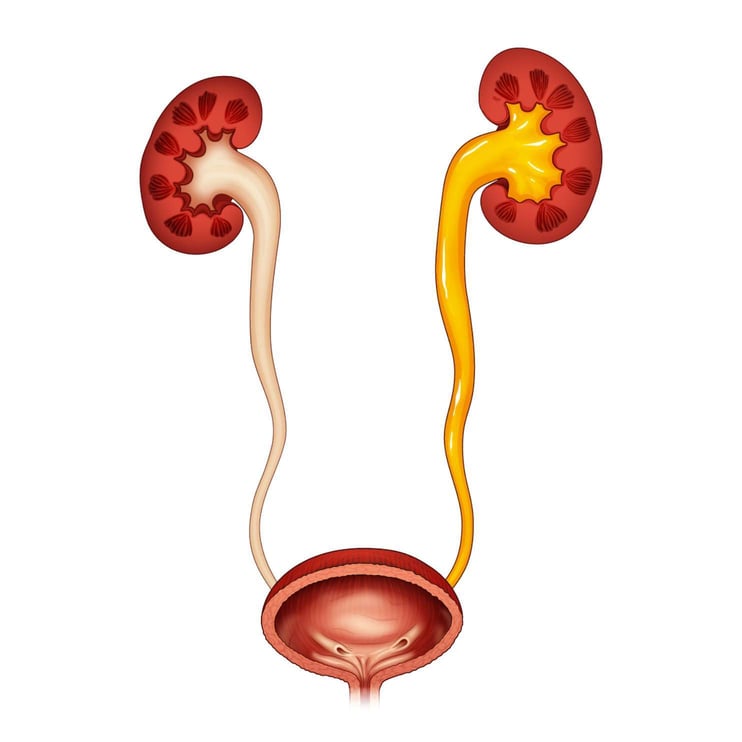
The likelihood of spontaneous resolution varies according to a child’s age, grade of VUR, and whether the VUR is on one ureter or both.
VUR Resolution Chart – Percent Chance of Reflux Resolution After A Specified Number of Years1
American Urological Association
| Age | 1 Year | 2 Years | 3 Years | 4 Years | 5 Years | |
| Grade 3 – One Ureter |
0-24 months old | 21.4% | 38.2% | 51.5% | 61.9% | 70% |
| Grade 3 – One Ureter |
2-5 years old | 13.4% | 25.0% | 35.1% | 43.8% | 51.3% |
| Grade 3 – One Ureter |
5-10 years old | 10.8% | 20.5% | 29.1% | 36.7% | 43.6% |
| Grade 3 – Both Ureters |
0-24 months old | 12.7% | 23.8% | 33.5% | 41.9% | 49.3% |
| Grade 3 – Both Ureters |
2-5 years old |
7.0% | 13.5% | 19.6% | 25.2% | 30.5% |
| Grade 3 – Both Ureters |
5-10 years old | 2.6% | 5.2% | 7.7% | 10.1% | 12.5% |
More severe grades of reflux are associated with lower rates of spontaneous resolution and a higher incidence of renal scarring.2
VUR Grade 3 treatment options
There are basically four ways your child’s pediatric urologist or doctor may decide to treat your child, depending on the severity of your child’s VUR. The higher the grade, the more likely that treatment is needed. VUR treatment options are dependent on the grade but vary from watchful waiting, antibiotics, endoscopic treatment with Deflux, or surgery.3


